Texas royalty owners are operating in a constructive oil price environment. West Texas Intermediate (WTI) crude closed at $102.43 per barrel on September 16 and trades at $101.24 as of September 17, down $1.19 (-1.2%) over the session. Downstream fuel prices at the retail level tend to lag crude movements, and a sustained pullback in WTI would be expected to work through to gasoline and diesel prices gradually.
Texas production remains at elevated levels. According to EIA data, Texas crude output reached approximately 5.83 million barrels per day in April 2026, the highest monthly figure since November 2025. Texas continues to anchor U.S. oil production, with the Permian Basin playing a central role. EIA Drilling Productivity Report data indicates Permian shale and tight formations produced approximately 6.9 million barrels per day in December 2025, representing a substantial share of total U.S. crude output. For royalty owners, sustained operator activity and deep well inventory — particularly across the Permian — translate directly into producing interests, royalty income, and ongoing development potential for undeveloped mineral acreage.
Natural gas presents a more nuanced outlook for Texas royalty owners. According to EIA Short-Term Energy Outlook projections, U.S. natural gas production is expected to reach a record 111.7 BCF per day in 2026, with a further increase to 115.9 BCF per day projected for 2027. LNG export volumes are also expected to reach record highs over the same period. For Texas royalty owners, this growth is particularly relevant to interests in the following plays:
- East Texas/Louisiana Haynesville Minerals
- Permian Minerals with significant associated gas
- Eagle Ford Minerals
- Barnett Shale Minerals
The principal risk in the natural gas segment is that record production growth can pressure spot prices, shifting relative value toward oil-heavy interests over pure dry-gas acreage—unless the gas position benefits from particularly attractive infrastructure arrangements or long-term development commitments.
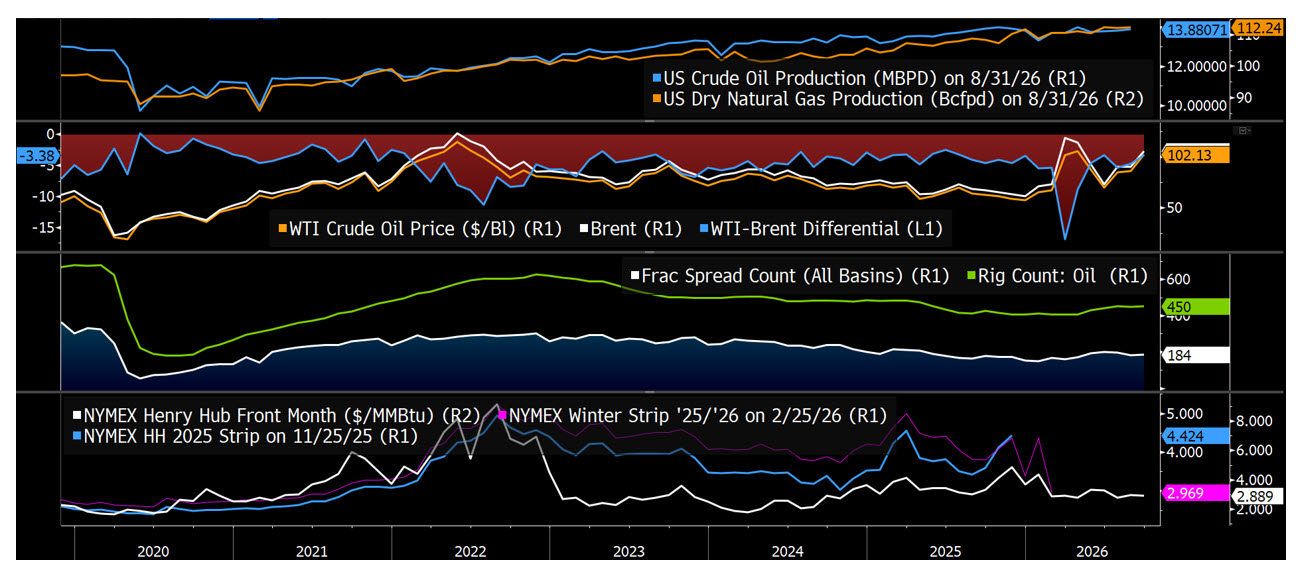
Natural Gas is becoming a more interesting part of the story, as Nat Gas is a mixed picture. United States Natural Gas production is expected to reach a record 111.7 BCF per day in 2026, with another increase to 115.9 BCF per day projected for 2027. LNG exports are also expected to reach record highs.
For Texas royalty owners, this is particularly relevant to:
*Haynesville Minerals
*Permian Minerals with significant associated gas
*Eagle Ford Minerals
*Barnett Shale Minerals
The royalty business remains fundamentally an acreage-quality business. A Texas mineral interest is not simply valued at a fixed multiple of annual royalty income. Sophisticated buyers are increasingly underwriting acquisitions across a full set of value drivers: current cash flow, remaining drilling inventory, operator quality, acreage position, decline curve characteristics, commodity mix, infrastructure access, and lease terms. Owners who understand these factors are better positioned to evaluate offers and negotiate from an informed baseline.
The Texas royalty market remains healthy and selective. Oil prices are firm, Permian drilling activity is sustained, natural gas production is at record levels with LNG demand providing a structural demand floor, and mineral buyer appetite remains active. When unsolicited offers to purchase mineral interests arrive, they typically signal that production is occurring or imminent on or near the relevant acreage.
Before responding to any offer, we encourage clients to contact our mineral management team to review activity within your legal descriptions. Mineral interests — particularly in the Permian — are attracting competitive buyer interest, and initial offers rarely reflect full value. Engaging our team before any transaction ensures you have the information needed to make a fully informed decision. Personally, I am against selling royalties or any mineral interests in Texas, especially the Permian Basin, because you never know what might happen or what the next trend will be. I have many stories of clients who didn’t know what, or how much, they owned and received 1099s from oil companies for large amounts of income. They then tracked it down to find that they owned quite a bit and then even owned more but had to go back and probate certain legal descriptions to receive that royalty as well. As a mineral manager, especially here in the trust department, it’s a fun task to help folks work through those steps and acquire the interests they have inherited. I love ferreting out money in suspense for my clients and even friends. It is one of my favorite parts of my position here at PlainsCapital Bank in the Oil and Gas department.


COMMODITY HIGHLIGHTS