In August, fixed-income markets remained focused on inflation, Federal Reserve policy, and Treasury market developments. Investors navigated an environment of elevated yields, resilient corporate fundamentals, and ongoing debate over whether current interest rates accurately reflect inflation risks and long-term growth prospects. The artificial intelligence investment cycle continued to influence corporate borrowing activity and economic expectations.
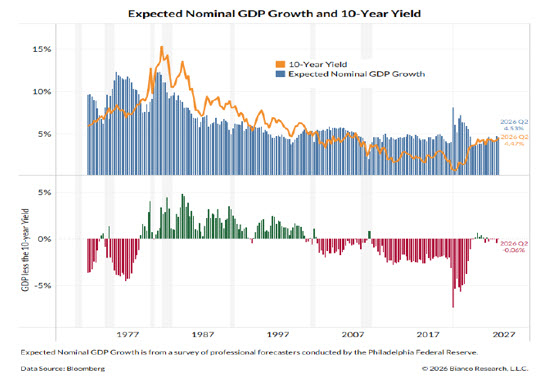
Federal Reserve policy remained the primary driver of market sentiment. Inflation has stayed above the Fed’s 2% target for an extended period, and investors remain divided on whether further tightening will be required. Recent readings show that price pressures have eased from prior peaks, but commodity markets, fiscal deficits, and strong nominal growth continue to cloud the outlook. Markets have repeatedly revised expectations for future policy actions as economic data and inflation releases have challenged the assumption that rates will move lower in the near term. As a result, interest-rate volatility remains elevated.
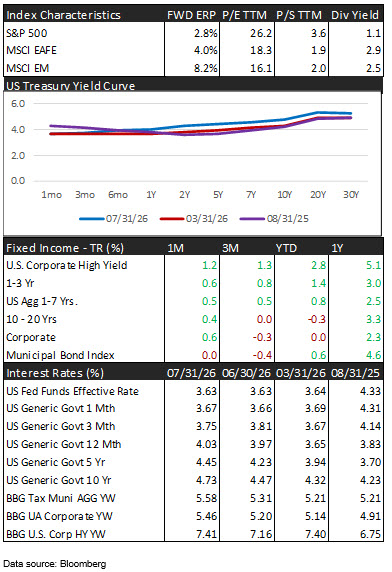
Treasury yields rose to multi-year highs earlier in the month before partially retracing. The 30-year yield reached 5.31% on August 17 — its highest level since 2007 — before pulling back to 5.20% by month-end. Treasury Secretary Bessent responded by expanding the long-end buyback program, at least doubling the maximum operation size to $4 billion effective September 9. The buybacks were reportedly funded through the Treasury General Account rather than by increased bill issuance, and produced a sharp bull flattening of the curve. However, some market participants have questioned whether the program can durably alter the direction of yields given persistent growth, inflation, and borrowing pressures.
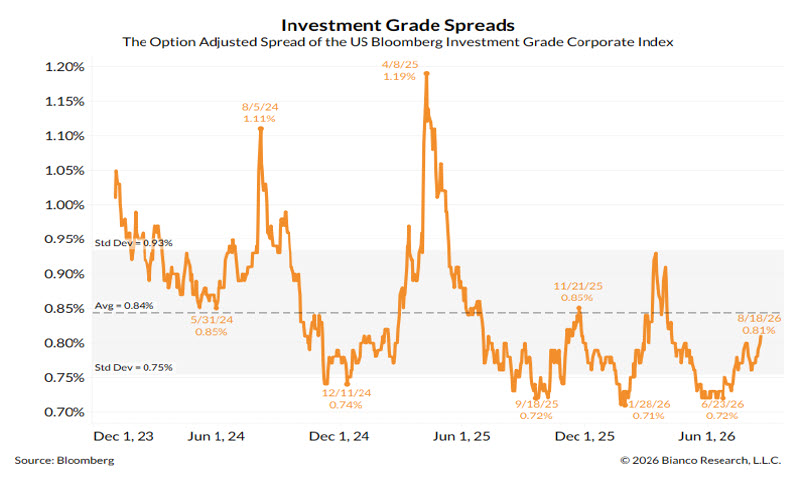
Credit markets remained notably resilient despite higher rates. Investment-grade OAS stands near the 5th percentile of its 10-year range, and high-yield OAS sits below the 25th percentile — both near historically tight levels. This indicates that investors continue to view corporate balance sheets and economic conditions favorably. Defaults remain contained, with no defaulted securities currently in the Bloomberg US High Yield Index. The overall picture reflects healthy credit fundamentals rather than broad financial stress.
Artificial intelligence and data-center investment continued to support corporate borrowing activity. Spending on technology infrastructure, cloud computing, and AI-related development remains substantial. Investors appear increasingly willing to support these expenditures as evidence of revenue growth and commercial adoption continues to emerge. While some remain concerned about the scale of AI-related debt issuance, current credit conditions suggest markets continue to view these investments as economically supportable.
The fixed-income outlook remains centered on inflation, economic growth, and Fed policy. Yields at current levels offer attractive income relative to recent years, particularly in high-quality sectors. Key risks include persistent inflation, additional upward pressure on long-term Treasury yields, elevated fiscal deficits, and policy uncertainty. Resilient corporate fundamentals, stable credit conditions, and continued productivity investment support the broader backdrop. The interplay among inflation trends, Treasury market dynamics, and AI-related capital spending will remain a critical determinant of fixed-income performance in the months ahead.
Sources: 3Fourteen Research, Strategas Research Partners, Bianco Research, Bloomberg, FRED, St. Louis Federal Reserve Bank


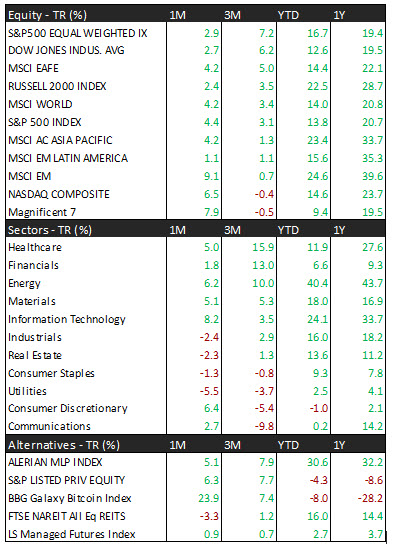
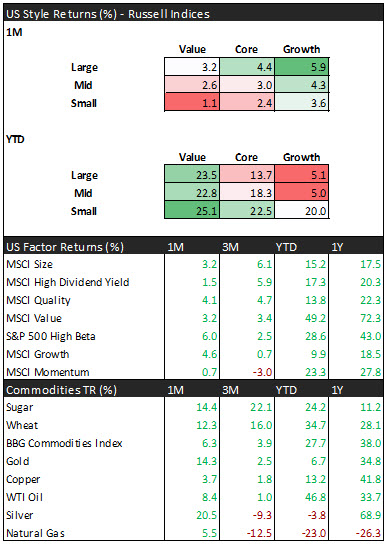
MARKET HIGHLIGHTS